Compliance-first workforce scheduling means risk is checked before a shift is published, not after a manager receives an exception report. The schedule is treated as an operational control surface: availability, role eligibility, maximum-hour rules, department scope, approvals, and change history are visible while managers are still drafting coverage.
This matters because most scheduling risk is created upstream. A manager fills an urgent opening, a student worker accepts a shift that conflicts with class, or a department borrows someone without confirming location eligibility. Each decision can be reasonable in isolation, but the published schedule becomes hard to defend when those decisions are not recorded or reviewed.
What compliance-first scheduling should verify before publishing
The first control is availability. A worker should not be offered or assigned a shift that conflicts with declared unavailable time, class schedules, approved time off, or other protected constraints. If a manager overrides that signal, the reason should be captured at the point of decision.
The second control is eligibility. Role, location, department, certification, and training constraints need to be checked before the schedule is released. A schedule that looks covered on paper is still risky if the person assigned cannot legally, safely, or operationally perform the work.
The third control is hour visibility. Teams need a live view of scheduled hours, projected weekly totals, overtime-sensitive thresholds, and policy exceptions while the draft is still editable. Waiting for payroll review turns scheduling into a correction workflow instead of a prevention workflow.
A practical prevention workflow
A prevention workflow starts with policy configuration, not with manager memory. Eligibility rules, maximum hours, department scope, approval requirements, and override reasons should be represented in the scheduling system so the same rules apply across every manager and location.
During draft scheduling, the system should show blockers and warnings directly beside the assignments that create them. The goal is not to stop all exceptions. The goal is to separate acceptable exceptions from silent errors and make the decision visible before publication.
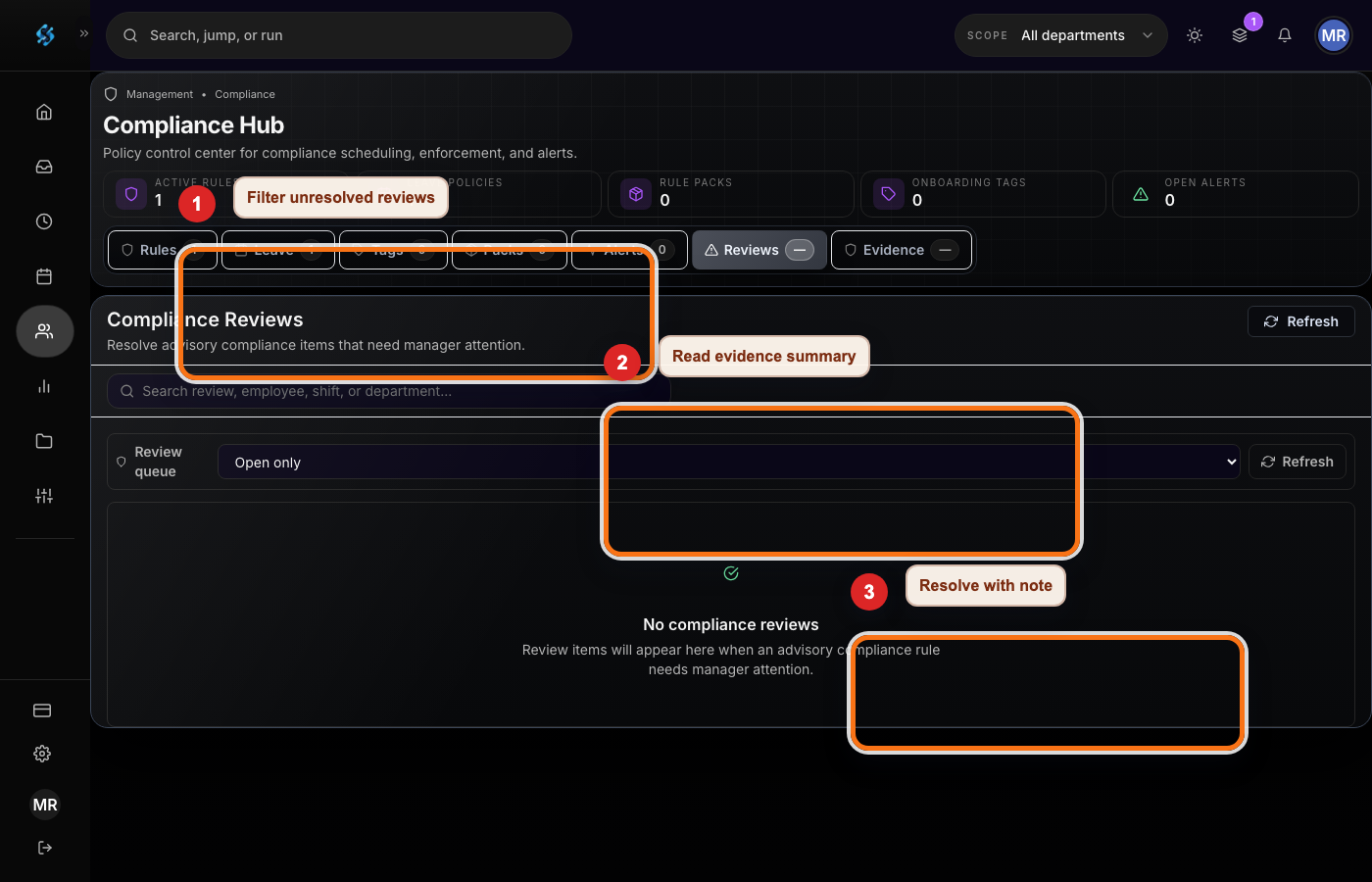
Before publishing, managers should run a schedule health review. That review should identify uncovered shifts, unresolved conflicts, missing approvals, unacknowledged changes, and workers projected above internal hour limits. A schedule is ready when leaders can explain what was checked and what exceptions remain open.
Common scheduling risks and prevention controls
| Risk area | Weak signal | Compliance-first control |
|---|---|---|
| Availability conflict | The worker later says they could not work | Block or warn on unavailable time before assignment, then record any manager override. |
| Role or location mismatch | Coverage appears filled but the worker is not eligible | Check role, location, and department eligibility before the shift can be published. |
| Hour threshold risk | Payroll review discovers excessive hours | Show projected weekly totals and exception thresholds inside the schedule draft. |
| Unreviewed changes | Managers cannot explain who changed a shift | Capture change history, requester, approver, timestamp, and reason code. |
| Cross-department borrowing | Another department loses coverage | Require visibility into home department schedules before publishing shared-worker assignments. |
Where audit trails belong
Audit trails are most useful when they are attached to the schedule decisions themselves. A generic activity log is not enough. Managers need to see who created a shift, who accepted it, who changed the worker, who approved the change, and why an exception was allowed.
The audit record should be readable by operations teams, not just engineers. It should answer simple questions: what changed, who approved it, when did the affected worker see it, and what policy or coverage pressure caused the decision? That is the difference between a log and operational evidence.
For teams with compliance-sensitive staffing, override notes should be structured enough to compare later. Free text can explain context, but categories such as availability override, role exception, location change, hour threshold, and emergency coverage make recurring problems easier to reduce.
Compliance-first scheduling checklist
- Confirm availability, time off, and protected unavailable windows before assigning workers.
- Check role, location, department, and certification eligibility before publishing shifts.
- Review projected weekly hours and internal hour thresholds while the schedule is still a draft.
- Require reason codes for manager overrides and exception approvals.
- Keep worker notifications, acknowledgements, shift changes, and approval decisions attached to the schedule record.
- Run a final schedule health review for open coverage gaps, unresolved exceptions, and unacknowledged critical changes.
How Shiftelix applies this model
Shiftelix is built around the idea that scheduling compliance should be visible in the same workflow where managers build coverage. The product emphasizes department-scoped scheduling, role eligibility, availability collection, approval context, and manager-facing schedule health signals.
That does not replace legal, HR, or payroll policy review. It gives operators a better system for applying those policies consistently. When the schedule becomes the place where policy checks, manager decisions, and worker communication meet, teams have fewer surprises after shifts are already worked.
A strict AdSense-ready version of the blog should make this expertise clear without stretching into legal advice. The practical guidance here is about operational controls, documentation habits, and scheduling workflows that reduce preventable risk.
Compliance-first scheduling FAQ
Is compliance-first scheduling the same as legal compliance?
No. Compliance-first scheduling is an operational approach for applying staffing rules, approvals, documentation, and review steps before schedules are published. Legal requirements still need to be defined by qualified counsel or HR policy owners.
What should managers review before publishing a schedule?
Managers should review availability conflicts, role and location eligibility, projected weekly hours, unresolved coverage gaps, pending approvals, unacknowledged changes, and any override reasons attached to the draft.
Why are audit trails not enough by themselves?
Audit trails document what happened, but they do not prevent weak schedules. The higher-value workflow surfaces issues before publication and then preserves the decision record for exceptions that leaders intentionally approve.